Portable - Orcad Pspice 16.3
Portable - Orcad Pspice 16.3
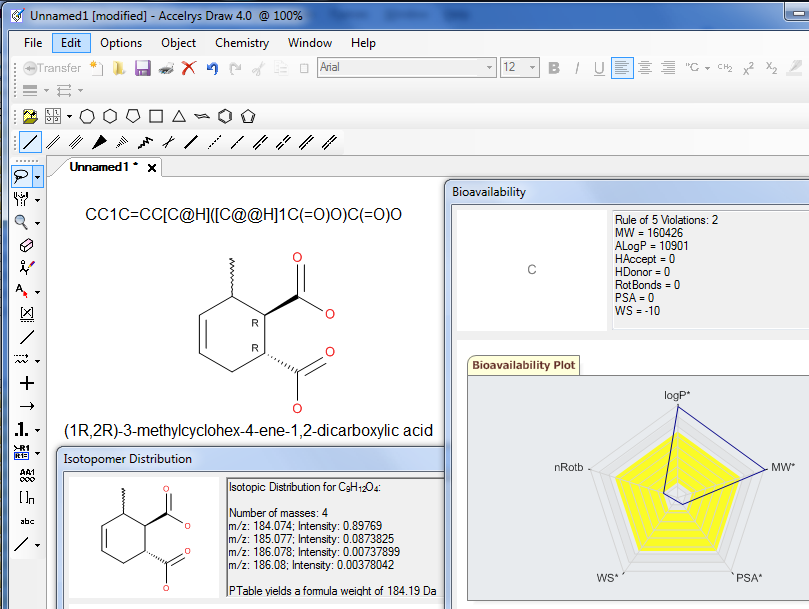 |
With the
same look-and-feel as ISIS/Draw, Accelrys Draw delivers speed and
efficiency to your chemical drawing experience.
Accelrys Draw can easily swap out existing ISIS/Draw or ChemDraw applications. |
|
Portable - Orcad Pspice 16.3Click here for more details about Rgroups, an example, and a detailed procedure how to draw a Markush query. To draw a Markush query:
|
|
|
| Generic Structure
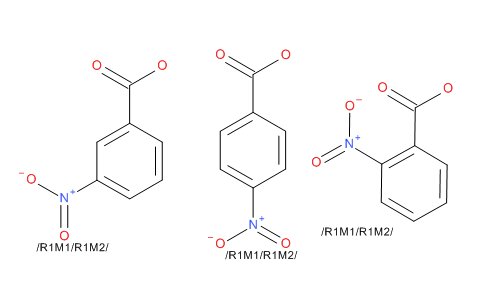
Enumerator The enumerator works against structures defined using the Rgroup tool in Accelrys Draw. In this mode you specify a scaffold with a number of Rgroup labels, then to add fragments to the Rgroup identifiers. The Add-in will calculate the complete set of structures that the Rgroups define. You can also define a generic region using the Sgroup tool. Draw the basic structure and using the Sgroup tool, drag a pair of brackets around a region that is repeated in the substance. From the dropdown select ‘generic’ for the bracket type, then select apply and exit from the dialog. Right click on one of the brackets and select the Attach Data option. In the dialog enter REPEATRANGE into the Field description box, and then enter the range in the Data box; leave the Search Operator set to none; the Tag field is optional. A contiguous range is required in the Data box, for example 3-6. A structure can contain both Rgroup definitions and Sgroup definitions, but they cannot overlap or be nested. You have the option to enumerate on to Accelrys Draw’s canvas, into an SDfile, or into an Isentris for Excel compatible spreadsheet. |
 |
|
Portable - Orcad Pspice 16.3The portable version of OrCAD PSpice 16.3 refers to a standalone, self-contained version of the software that can be run from a USB drive or a portable storage device, without requiring installation on a specific computer. This version is often used by designers who need to work on multiple computers or in environments where software installation is restricted. Now, let's dive into the story of OrCAD PSpice 16.3 Portable. orcad pspice 16.3 portable For those who may not know, OrCAD PSpice is a popular SPICE (Simulation Program with Integrated Circuit Emphasis) simulator used for electronic circuit simulation and analysis. It's widely used in the field of electrical engineering and electronics. The portable version of OrCAD PSpice 16 The story of OrCAD PSpice 16.3 Portable is one of innovation, convenience, and flexibility. While it's not without its challenges and limitations, the portable version offers designers a powerful tool for circuit simulation and analysis, wherever they may be. As the electronics industry continues to evolve, it's likely that we'll see even more advanced features and capabilities in future versions of OrCAD PSpice. For those who may not know, OrCAD PSpice OrCAD PSpice has a long history dating back to the 1980s. The first version of PSpice was developed by MicroSim, which was later acquired by OrCAD in 1998. Over the years, the software has undergone significant improvements, adding new features and capabilities. A very specific and technical topic! |
http://accelrys.com/products/informatics/cheminformatics/draw/add-ins.html | |
Chemical Drawing Programs – The Comparison of Accelrys (Accelrys) Draw, ChemDraw, DrawIt, ACD/ChemSketch and Chemistry 4-D DrawUniversity of Debrecen, POB 70, H-4010 Debrecen, Hungary, e-mail: Last major update : 1.11.2011 If you have any comment, do not hesitate to contact the author at the above adress. |
http://dragon.klte.hu/~gundat/rajzprogramok/dprog.html |